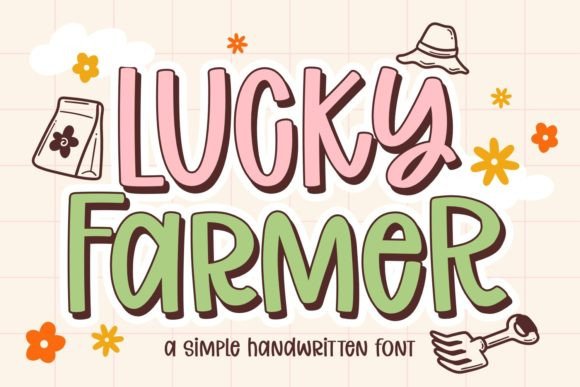
Lucky Farmer: A Handwritten Font with Country Charm
There's something undeniably comforting about typography that feels human. In a world saturated with sleek, sterile digital interfaces, a font like Lucky Farmer arrives like a breath of fresh air—literally. This isn't just another script typeface; it's a visual whisper of open fields, weekend markets, and the kind of authentic warmth that makes people pause and smile. If your project needs to communicate approachability and genuine cheerfulness, this handwritten font might just be the missing piece you've been searching for.
More Than Just Pretty Letters
What sets Lucky Farmer apart from other display fonts is its distinctive personality. The strokes have a deliberate, hand-drawn quality that avoids looking overly polished or mechanical. Each letterform features rounded edges and lively curves, creating a rhythm that feels organic and inviting. This isn't the rigid calligraphy of formal invitations—it's the friendly scrawl you'd find on a chalkboard menu at a countryside café, or the playful lettering on a artisanal product label.
The visual appeal lies in its balance. It manages to be whimsical without being childish, casual without sacrificing legibility. For designers and brand strategists, this is crucial. You want a typeface that conveys personality but still functions effectively across different mediums. Lucky Farmer achieves this through careful construction—the letter spacing is generous enough for readability, while the varying baseline adds that authentic handwritten charm.
Where This Font Truly Shines
Understanding where a creative font like this works best can save you hours of experimentation. Think about projects where human connection and approachability are paramount:
- Brand Identity & Logo Design: Perfect for bakeries, farm-to-table restaurants, organic product lines, boutique hotels, or any business that wants to emphasize handmade quality and personal touch.
- Packaging Design: Imagine this typeface on artisanal jam labels, craft beer bottles, or specialty coffee packaging. It instantly communicates small-batch authenticity.
- Social Media Graphics: The cheerful personality cuts through the noise of crowded feeds, making it excellent for Instagram quotes, Facebook headers, or Pinterest pins promoting lifestyle brands.
- Editorial Layouts & Blogs: Use it for pull quotes, chapter headings, or featured article titles to add visual interest and break up dense text blocks.
- Invitations & Event Materials: Wedding invitations for rustic themes, farmers market promotions, or community event posters benefit from its welcoming aesthetic.
- Merchandise & Print Materials: T-shirts, tote bags, greeting cards, and posters gain character and perceived value with typography that feels personally crafted.
For small business owners and content creators, this versatility is particularly valuable. You're often working with limited resources but need your visual materials to look cohesive and professional across multiple platforms. A well-chosen display font like Lucky Farmer can become a unifying element in your design assets.
Building Recognition Through Typography
Typography isn't just about aesthetics—it's a strategic tool for brand recognition. When you consistently use a distinctive typeface like Lucky Farmer across your touchpoints, you create visual shorthand for your audience. They begin to associate that particular style with your business before even reading the words.
Consider how this improves your professional presentation. A cohesive visual identity signals reliability and attention to detail. Whether it's your website header, email newsletter, or product packaging, maintaining typographic consistency builds trust subconsciously. Your audience may not analyze the font choice, but they'll feel the difference between a scattered visual approach and one that's intentionally curated.
Readability remains paramount, of course. While Lucky Farmer excels in headlines and short-form content, it's wise to pair it with a clean sans-serif or serif font for body text. This creates visual hierarchy and ensures your message gets across clearly. The handwritten style works best when it's given space to breathe—not crammed into lengthy paragraphs where its charm becomes a distraction.
Making It Work in Your Projects
Practical implementation requires some thoughtful consideration. First, always test font pairings before committing. Lucky Farmer's friendly curves might clash with overly geometric typefaces, but could harmonize beautifully with simple sans-serifs like Open Sans or classic serifs like Georgia. Create sample layouts to see how the fonts interact at different sizes.
Pay attention to context. A premium font deserves premium application. This means ensuring adequate contrast against backgrounds, proper sizing for different screens and print materials, and thoughtful color choices that enhance rather than fight the typeface's personality. On websites, consider using it sparingly for key elements rather than overwhelming visitors with handwritten text throughout.
Review the included font styles thoroughly. Many premium fonts come with multiple weights, alternates, or ligatures that expand your creative options. Understanding these variations allows you to maintain consistency while introducing subtle visual interest where needed.
Finally, never overlook commercial licensing. If you're using the font for client work, merchandise, or any commercial application, ensure your license covers that specific use. This protects both you and the font creator, and prevents legal complications down the road. Reputable font marketplaces make licensing terms clear—take the time to read them.
A Thoughtful Addition to Your Toolkit
Choosing the right typeface is ultimately about alignment—between the font's personality and your project's goals, between its visual characteristics and your audience's expectations. Lucky Farmer isn't trying to be everything to everyone. It's a specialist, offering a specific mood and aesthetic that resonates deeply when the context is right.
For the designer crafting a brand identity, the entrepreneur developing product packaging, or the content creator seeking to establish a distinctive voice, this handwritten font offers something valuable: authenticity with polish. It bridges the gap between casual warmth and professional execution, making it a worthy addition to any creative's typography arsenal.
As with any design asset, the true test comes in application. Download a test version, experiment with different contexts, and see how it interacts with your existing visual language. The best typography choices aren't made in isolation—they're discovered through thoughtful experimentation and real-world testing.