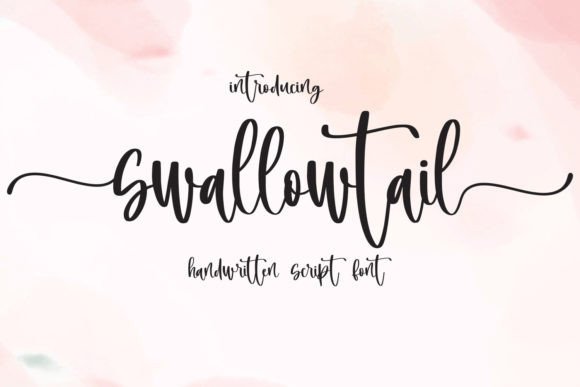
Swallowtail: The Handwritten Font That Feels Like a Love Letter
There's a particular warmth in a handwritten note—a slight imperfection in the loop of a 'g', a gentle pressure on the downstroke of a 'y'. It's this intimate, human quality that digital typefaces often strive to capture. Swallowtail achieves it with effortless grace. This isn't just another script font; it's a carefully crafted collection of letterforms that feel personal, endearing, and infused with a romantic flair. For designers and creators, it represents a tool that can instantly inject a project with heartfelt charm and authenticity, moving beyond sterile digital precision to something that resonates on a more emotional level.
More Than a Pretty Script: Understanding Swallowtail's Personality
At its core, Swallowtail is a premium handwritten font designed to evoke affection. Its letters flow with a natural, connected rhythm, mimicking the fluid motion of a pen held by a caring hand. The slight variations in baseline and weight prevent it from feeling robotic, giving it the organic texture of real ink on paper. This makes it a standout display font for projects where the goal is to convey warmth, celebration, or personal connection. While it excels in romantic contexts, its versatility extends to any design needing a touch of approachable elegance.
When selecting a typeface, understanding its voice is crucial. Swallowtail speaks the language of greeting cards, wedding invitations, boutique branding, and heartfelt blogs. It’s the font you’d choose for a small-batch candle company’s logo, the header of a lifestyle blogger’s site, or the cover of a self-published poetry collection. Its strength lies in its ability to make a brand or message feel personal and curated, which is invaluable in a market saturated with generic visuals.
Practical Applications: Where Swallowtail Truly Shines
Theory is one thing, but real-world application is where a font proves its worth. Swallowtail's design makes it exceptionally versatile for a range of creative and commercial projects. Its legibility at various sizes allows it to transition smoothly from large-scale headings to smaller, supportive text blocks.
Consider these specific uses:
- Brand Identity & Logo Design: For businesses built on a personal, artisanal, or romantic ethos—a florist, a wedding planner, a handmade jewelry brand—Swallowtail can become the cornerstone of the brand identity. It creates an immediate emotional connection and sets a tone of care and quality.
- Packaging Design: Imagine this script on the label of a artisanal jam, a scented soap, or a gourmet chocolate box. It communicates craft and attention to detail, elevating the perceived value of the product.
- Social Media Graphics & Web Design: In the fast-scroll world of Instagram and Pinterest, a visually distinct header or quote graphic can stop a thumb. Swallowtail adds instant personality to social media graphics, making quotes, announcements, and stories feel more engaging. On a website, it works beautifully for hero section headings, author names, or pull quotes, adding a layer of sophistication and warmth to the web design.
- Print Materials & Invitations: This is its native habitat. For wedding invitations, save-the-dates, event posters, and editorial layouts for magazines or lookbooks, Swallowtail provides a classic, romantic aesthetic that feels both timeless and contemporary.
- Digital Products & Marketing Assets: E-book covers, online course graphics, email newsletter headers, and marketing assets like promotional flyers all benefit from a font that can convey a specific mood quickly and effectively.
Pairing for Impact: Building a Cohesive Typographic System
A font rarely works in complete isolation. The true skill in typography is creating harmonious font pairings. Swallowtail, as a expressive script font, performs best when balanced with a cleaner, more neutral companion. This contrast ensures readability and creates a visual hierarchy that guides the viewer's eye.
A proven strategy is to pair it with a simple, clean sans-serif font for body text. Think of a typeface like Lato, Open Sans, or Montserrat. The sans-serif provides a calm, readable foundation for paragraphs, while Swallowtail commands attention in headings, subheadings, or key quotes. This combination maintains visual consistency across a project while allowing each font to play to its strengths.
For a more classic or editorial feel, pairing Swallowtail with a refined serif font like Georgia or Playfair Display can work wonderfully. The key is to let Swallowtail be the star in headline roles and use the supporting font for longer-form text. Always test your pairings in context—mock up a business card, a website header, and a social media post to see how the relationship between the fonts feels in real use.
Key Considerations for Professional Use
Before integrating any creative font into a commercial project, a few practical checks are essential. First, review the full character set and any included styles. Does Swallowtail come with alternate characters, ligatures, or stylistic sets? These features can provide additional customization, allowing you to tweak specific words to perfection and avoid repetitive letter shapes, enhancing the handwritten feel.
Second, and critically, is licensing. A commercial font license is a legal requirement for using a typeface in projects that generate revenue, whether for a client or your own business. Ensure the license you purchase covers your intended use—whether for digital products, printed merchandise, or client work. Reputable foundries and marketplaces are clear about their licensing terms, providing peace of mind.
Finally, always prioritize readability. While Swallowtail is crafted for clarity, overly decorative scripts can become challenging to read at small sizes or in long blocks of text. Use it strategically where its personality can shine without hindering comprehension. Test it on different backgrounds and at various scales to ensure it remains legible and effective in every application.
In the end, choosing a typeface like Swallowtail is about more than just aesthetics; it's about selecting a voice for your project. Its ability to convey love, warmth, and personalized care makes it a powerful asset in any designer's toolkit. When used thoughtfully—paired wisely, licensed correctly, and applied with an eye for context—it can transform a simple design into a memorable and emotionally resonant experience for your audience.